April 2, 2026
Core vs. Spike Aeration: Which Method is Best for Aeration and Seeding in Auburn Hills?
Core vs. Spike Aeration: Which Method is Best for Aeration and Seeding in Auburn Hills?
For homeowners in Auburn Hills, MI, a thick, vibrant lawn is often the centerpiece of a beautiful home. However, achieving that "golf course" look in Oakland County isn't just about water and fertilizer. The secret lies in the soil. Because of the heavy clay composition throughout Auburn Hills, soil compaction is a constant threat that chokes off grass roots and wastes your investment in lawn care.
When you start looking into aeration and seeding to repair a patchy or thinning lawn, you will likely encounter two different methods: core aeration and spike aeration. Choosing the wrong one isn't just a minor mistake; it can actually make your soil compaction worse. In this guide, we will compare these two methods side-by-side through the lens of Michigan’s unique climate and soil types, ensuring you choose the right path for your next Aeration and Seeding Services Auburn Hills, MI project.
Problem Explanation: The "Clay Wall" of Auburn Hills
In Auburn Hills, the soil isn't just dirt; it’s a dense, heavy clay that acts like a sponge when wet and like concrete when dry. This is known as "soil compaction." When soil is compacted, the tiny pores that hold oxygen and moisture are crushed.
For grass to grow, it needs "pore space." Without it, the roots stay shallow, looking for air near the surface rather than digging deep for nutrients. This makes your lawn incredibly fragile during a hot Michigan August. Furthermore, compaction leads to a buildup of thatch, a layer of dead organic matter that prevents water from ever reaching the soil. If your Auburn Hills lawn feels "bouncy" or if water pools on the surface after a light rain, you are dealing with a "clay wall" that only professional aeration and seeding can penetrate.
Signs Your Lawn Needs Professional Intervention
Before you decide on a method, look for these local "warning signals" that your Auburn Hills property is suffering from compaction:
- The "Hard Ground" Syndrome: Even after a heavy rain, the soil feels impenetrable. If you try to stick a pencil into the ground and it snaps, your compaction is severe.
- Persistent Thinning: You have seeded before, but the grass stays thin or dies off quickly because the roots have nowhere to go.
- Localized Brown Spots: High-traffic areas (near the driveway or where kids play) turn brown first, even with regular watering.
- Thatch Thickness: If you cut a small wedge of your turf and see more than half an inch of brown, spongy material between the green blades and the soil, your lawn is suffocating.
Spike Aeration: A Temporary (and Risky) Fix
Spike aeration uses solid, pointed tines to poke holes into the turf. While it is often marketed as a cheap DIY alternative for aeration and seeding, it is rarely the right choice for Michigan clay.
The Process: As the spike enters the ground, it doesn't remove anything. Instead, it pushes the soil out of the way to create a hole. In our local clay-heavy soil, this "pushing" action actually compresses the soil around the hole even tighter. Imagine pushing a pencil into a block of modeling clay; the hole is there, but the clay around it is now twice as dense. For aeration and seeding, this is counterproductive. The seed might fall into the hole, but the surrounding soil is too hard for the new, fragile roots to grow into.
Core Aeration: The Professional Gold Standard
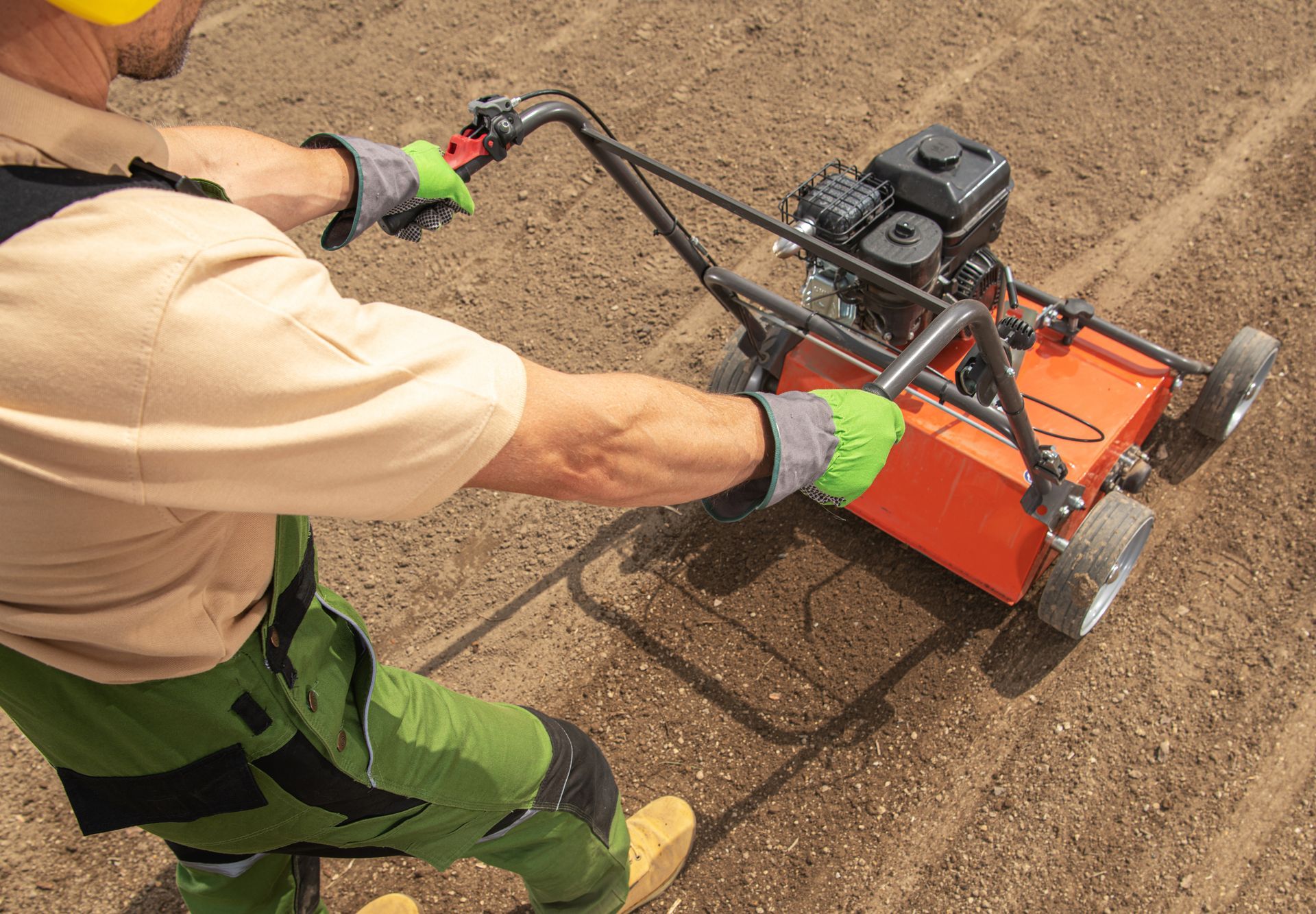
Core aeration is a mechanical process that uses hollow tines to physically remove small cylinders (plugs) of soil and thatch from the ground. These cores are typically 2 to 3 inches deep and about the size of a finger.
Why it Works for Aeration and Seeding: By physically removing the soil, you create actual "room to breathe." The surrounding soil naturally shifts to fill these gaps, immediately reducing the density of the entire lawn.
- Seed-to-Soil Contact: This is the most critical factor for aeration and seeding. The holes created by core aeration act as "incubation chambers" for the seed, protecting it from the wind, birds, and the drying Michigan sun.
- Oxygen Exchange: It allows carbon dioxide to escape the soil and oxygen to enter, stimulating the microbial activity needed to break down thatch.
- Water Penetration: It turns your lawn into a "sieve," allowing water to reach the root zone.
The "Seeding" Half: Why Timing is Everything in Michigan
In Auburn Hills, we use cool-season grasses like Kentucky Bluegrass and Turf-Type Tall Fescues. These grasses have a specific biological window for growth, which is exactly why knowing The Best Time to Plant Grass Seed in Michigan is so crucial.
If you perform aeration and seeding in the spring, the new grass has to compete with aggressive summer weeds like crabgrass. However, if you perform it in the late summer or early fall (August 15th to September 30th), the conditions are perfect. The soil is warm from the summer sun, but the air is cool, and the "Lake Effect" moisture provides the consistent dampness needed for germination.
When is the best time for aeration and seeding in Auburn Hills, MI?
The optimal window for aeration and seeding in Auburn Hills is between late August and late September. This timing allows new grass seed to establish a deep root system during Michigan’s mild autumn before the first hard freeze, ensuring the lawn is strong enough to survive the winter dormancy period.
The Benefits of a Thick Lawn in Oakland County
A thick lawn isn't just about aesthetics; it’s an environmental asset. In Auburn Hills, where urban development is high, a healthy lawn acts as a natural filter for rainwater, preventing oil and pollutants from our roads from entering the Clinton River watershed. Furthermore, a dense lawn grown through proper aeration and seeding stays cooler in the summer, reducing the "heat island" effect around your home. By investing in core aeration, you are also reducing the need for chemical herbicides or intense Lawn Weed Control and Fertilization, as a thick, healthy lawn naturally chokes out weeds.
Costs of Aeration and Seeding in Auburn Hills (2026)
- Standard Residential Lot (Up to 8k sq. ft.): $450 to $750 for combined aeration and seeding.
- Large Estate Lots: $800 to $1,500+.
- Factors Influencing Cost: The type of seed used (Bluegrass vs. Fescue blends), the current level of thatch, and whether "double-pass" aeration is required for severely compacted areas. Professional services in Auburn Hills also factor in the cost of high-quality, weed-free seed.
When to Call a Professional for Aeration and Seeding
- Equipment Weight: Professional core aerators weigh several hundred pounds. Without the right weight and tine pressure, you will not pull a deep enough core in Michigan clay.
- Seed Quality: Pros use "Blue-Tag" certified seed that is free of weed seeds and "filler" grasses.
- Irrigation Knowledge: We know how to navigate around sprinkler heads and shallow lines that DIYers often damage.
- Consistency: A professional service ensures an even "hole density" (typically 20 to 40 holes per square foot).
Auburn Hills Soil & Climate
Auburn Hills presents a unique challenge because of the rolling terrain near the Clinton River. In many neighborhoods, such as those near Oakland University, the "topsoil" is actually thin "fill dirt" left over from construction, which compacts much faster than natural soil. Furthermore, the heat-island effect of the city means Auburn Hills lawns can dry out faster than more rural parts of Michigan. This makes the "water retention" benefit of core aeration and seeding even more vital for local homeowners.
Your Auburn Hills Lawn Experts
With years of experience serving the Auburn Hills community, we understand the specific grass blends and soil conditions of Oakland County. We are fully licensed and insured, and we utilize the highest-grade equipment to ensure your aeration and seeding project is a success. We provide a technical assessment of your lawn's health and a customized plan to ensure your grass grows back thicker and greener than ever.
Schedule Your Aeration and Seeding in Auburn Hills
Is your lawn struggling to keep up with the neighborhood? Do not let compaction win. Our professional aeration and seeding services are the most effective way to restore your lawn's health. Book Your Auburn Hills Lawn Audit today to schedule your Fall service and get a free quote for your property!
Quick Answers for Auburn Hills Homeowners (FAQ)
How long after aeration and seeding can I mow my lawn?
Wait at least 3 to 4 weeks. This allows new grass seedlings to reach a height of about 3 inches and establish a root system strong enough to withstand the mower's weight and suction.
Do I need to water my lawn after aeration and seeding?
Yes. For the first two weeks, perform light watering 1 to 2 times per day to keep the seed damp. Once the grass reaches an inch in height, transition to deeper, less frequent watering to encourage root growth.
Will core aeration leave a mess on my driveway?
Our professional teams in Auburn Hills blow off any soil plugs or stray seeds from your driveway and sidewalks. The plugs on the lawn itself should be left alone, as they will disappear within 10 to 14 days.
How many cores per square foot are needed?
For effective compaction relief in Auburn Hills clay, we aim for 20 to 40 cores per square foot. This ensures the soil density is significantly lowered across the entire yard.
Is it better to aerate and seed in the spring or fall?
Fall is significantly better for Auburn Hills homeowners. Spring seeding often fails because the new grass cannot survive the summer heat, and spring aeration can trigger the germination of crabgrass.