
Lawn Care in Almont, MI
Why Almont Homeowners Watch Their Lawns Thin Out Despite Doing Everything Right
You water consistently through July and August. You lay down bags of fertilizer from the home improvement store. But by late summer, crabgrass has claimed the sunny strips along the driveway, the backyard has two or three dead patches that refuse to respond to anything, and the front lawn looks more washed out than it did in May. Most Almont homeowners eventually land in the same place: the problem was never effort. It was timing and soil knowledge.
Almont sits on Lapeer-Miami-Marlette glacial moraine soils, a sandy loam to light clay loam mix that behaves very differently from the heavier clay common in Macomb County suburbs 20 miles south. Sandy loam warms faster in spring, which means crabgrass seeds can germinate in late April, sometimes two to three weeks earlier than homeowners expect based on what they read online for Michigan generally. Pre-emergent applications timed for Shelby Township lawns often arrive too late for Almont properties along Van Dyke Road and Church Street.
Visionary Fertilization is a veteran-owned lawn care company based in Southeast Michigan with 35 years of combined experience treating lawns throughout the region. Every Almont property gets a walk-through assessment before the season begins, because what a lawn along North Main Street needs on a shady, narrow cottage lot differs significantly from what a large parcel on Millville Road requires. A 7-Step Treatment Program built around locally sourced, organic-blend fertilizers is the foundation of the approach, timed specifically to the conditions each lawn faces through the season.
Common Lawn Problems in Almont, MI

Persistent Weed Pressure That Returns Season After Season
Crabgrass, dandelions, and chickweed are the three most common complaints from Almont homeowners, and they share one cause: turf that is thin enough to leave bare soil exposed. Weed seeds need light and open ground. Once crabgrass establishes in a sunny patch, it produces thousands of seeds by fall, and those seeds overwinter in the soil waiting for the next spring. Without a pre-emergent treatment applied before soil temperatures reach 55 degrees Fahrenheit, typically late April in Lapeer County, that seed bank germinates again. A single missed treatment year can mean three to four seasons of rebuilding turf density.
Grub Damage Working Below the Surface
Japanese beetle and masked chafer grubs are active in Almont lawns throughout midsummer, feeding on grass roots approximately two to three inches below the surface. By the time dead patches appear in August, the feeding damage is already weeks old. The turf peels back like loose carpet because the root system has been severed. Homeowners often assume the damage is drought stress and increase watering, which does nothing for grub injury. The key diagnostic test is whether brown patches pull free from the soil with minimal resistance.

Snow Mold Recovery Damage in Spring
Pink and gray snow mold are both present in Lapeer County, and extended snow cover events create the conditions for fungal spread within the turf canopy. Almont typically receives between 48 and 52 inches of snowfall annually, and winter pack in the northern township sections can remain for three to six weeks at a stretch. In spring, homeowners discover matted, discolored areas where the turf was compressed under snow. Left untreated, snow mold weakens existing turf enough that weeds fill those zones before healthy grass can recover on its own.
Warning Signs Your Almont, MI Lawn Needs Professional Attention
Yellowing That Spreads in an Expanding Circle
A single yellow or brown area that slowly grows outward from a center point over two to three weeks is a signal of active fungal activity, usually dollar spot or red thread disease, working through the turf canopy. Dollar spot patches expand to roughly the size of a dinner plate and tan out in the center. Red thread produces a pink-red thread-like coating on the tips of infected blades. Both diseases accelerate in humid conditions when overnight temperatures stay above 60 degrees Fahrenheit. The outward expansion pattern is what separates fungal activity from drought or nutrient stress.
Crabgrass Seed Heads Forming Before Mid-July
Crabgrass seed heads appearing before the middle of July mean the plant has already completed its establishment phase and is moving into reproduction. Any pre-emergent application opportunity for that season has been missed. The more important signal is volume: if seed heads are visible across a significant portion of the sunny sections of the lawn by early July, the pre-emergent application timing for the following spring needs to move earlier, often to the first week of May rather than mid-May.
Irregular Dead Zones Where Turf Pulls Free From the Soil
Healthy grass roots anchor the plant firmly enough that pulling on a blade requires real force. In grub-damaged areas, entire sections of turf lift with minimal resistance because the root system below is gone. Rolling back a small section at the edge of a dead zone and finding white C-shaped larvae in the top two to three inches of soil confirms active grub feeding. Waiting until visible dead zones appear to investigate means the damage is already done for that season.

Our Lawn Care Process in Almont, MI
Step 1 — Property Assessment and Program Design
The process starts with a walk-through of the full property before any product is applied. Soil texture, shading patterns, existing weed pressure, and turf density are all documented. Properties along Church Street and the historic downtown corridor tend to have older, compacted soils under established shade trees, while lots on the eastern edges of Almont Township often have younger topsoil over glacial subgrade. The assessment determines which fertilizer formulation, granular or liquid, and which weed control timing is appropriate for that specific property.
Step 2 — Pre-Emergent and Early Season Fertilizer Application
The first visit applies pre-emergent crabgrass control combined with an early round of fertilizer to give the lawn a density advantage heading into spring. Timing is calibrated to Lapeer County soil temperature data, not a fixed calendar date, because warm spring conditions in Almont can push the crabgrass germination window forward by two weeks.
Step 3 — Licensed Application and Michigan MDARD Compliance
All pesticide applications are performed under Michigan Department of Agriculture and Rural Development (MDARD) licensing requirements. MDARD can be reached at P.O. Box 30017, Lansing, MI 48909, (800) 292-3939. Licensed applicators carry the credentials, product knowledge, and liability coverage that over-the-counter application cannot replicate. Application rates are calibrated per the licensed program to ensure efficacy and full label compliance.
Step 4 — Mid-Season Maintenance Visits
Visits 3 through 5 in the program cover slow-release summer fertilizer, spot herbicide treatment for any weed escapes, and an optional grub preventative application in midsummer. Grub preventative timing matters: products that prevent grub damage must be applied before egg hatch, typically late June through mid-July in Lapeer County.
Step 5 — Fall Strengthening and Winterization
The final two visits apply late-season fertilizer to build root carbohydrate reserves and a high-potassium pre-winter application to help turf tolerate freeze-thaw cycles. Lawns that receive proper fall feeding recover from winter significantly faster the following spring. Active service agreements transfer to the new homeowner if a property sells during or after the program cycle.
Lawn Care Treatment Options for Almont, MI Properties
Scenario 1 — Organic-Blend Program for Households With Children and Pets
Families with young children and pets in the yard regularly benefit from a locally sourced, organic-blend fertilizer program. These formulations feed the soil biology rather than force-feeding the grass blade directly, resulting in slower but more durable color and density improvements. Response takes longer, typically two full seasons before the improvement becomes obvious, but the end result is a denser, more disease-resistant lawn without synthetic compound residue on the surface.
Scenario 2 — Synthetic Program for Severely Stressed or Weed-Dominated Lawns
Properties that are more than 40 percent weed coverage, or lawns with multiple years of skipped treatments, generally need the faster response that synthetic fertilizer and herbicide programs provide. Synthetic quick-release nitrogen delivers visible color improvement within 7 to 10 days. Broadleaf herbicide at the correct rate clears dandelions and chickweed efficiently. This scenario functions as a reset, typically followed by a transition to a hybrid or organic program once the lawn is re-established.
Scenario 3 — Hybrid Program Balancing Results and Environmental Responsibility
The hybrid option combines organic-blend slow-release fertilizers for the main season feedings with targeted synthetic herbicide applications where weed pressure demands a faster intervention. This is the most common scenario for established Almont properties that have reasonable turf coverage but ongoing weed pressure in specific zones. It delivers visible results in a timeframe homeowners can see each season while building long-term soil health.
How Almont, MI Climate Affects Your Lawn
Lapeer County's Freeze and Thaw Cycle Puts Turf Under Repeated Stress
Almont's last frost typically falls between May 5 and May 15, with the first fall frost arriving around October 10 to 15. That growing window runs roughly 150 to 155 days, shorter than what homeowners in southeastern Macomb County experience and short enough that every week of the treatment window matters. More relevant than the frost dates is the late-March and April freeze-thaw cycle: daytime temperatures climb above 50 degrees while nights still drop into the low 20s. Turf that emerged from winter with low carbohydrate reserves because it missed a fall potassium application cannot handle repeated freeze-thaw heaving without crown damage.
Crabgrass Pressure Arrives Earlier Than Most Homeowners Expect
Sandy loam soils on the glacial moraines in and around Almont warm faster than the clay-heavy soils farther south. Soil temperatures in the upper two inches can reach the 55-degree crabgrass germination threshold by late April in warm years, sometimes two weeks ahead of what homeowners expect based on general Michigan lawn care advice. A property on a south-facing slope along Van Dyke Road will hit that threshold faster than a shaded lot on North Main Street. Visionary Fertilization tracks soil temperature data, not calendar dates, to time pre-emergent applications for Almont properties specifically.
Extended Snow Cover Creates Snow Mold Conditions Most Years
Lapeer County receives 48 to 52 inches of snowfall annually, and Almont properties in the northern township sections often experience snow cover events where the same pack remains for three to six weeks. Pink snow mold (Microdochium nivale) and gray snow mold (Typhula species) both require extended cover over grass that has not properly hardened for winter. Lawns that received a fall pre-winter potassium application harden more thoroughly and show measurably less snow mold damage the following spring compared to properties that skipped that visit.
Lawn Care Challenges Across Almont, MI Neighborhoods
Historic Village Lots Along North Main Street and Church Street
Properties in the historic village core, particularly the narrow cottage and Colonial Revival lots close to downtown along North Main Street and Church Street, typically have mature shade trees that reduce sun penetration and draw moisture and nutrients away from grass roots. Shaded lawns in this corridor do not respond to the same fertilizer timing as full-sun properties. Nitrogen applications in dense shade produce excessive blade growth without the root development needed to survive summer stress, and disease pressure from dollar spot and red thread runs higher in these low-light environments.
Larger Township Parcels Along Van Dyke Road and Millville Road
Moving out of the village onto township parcels along Van Dyke Road and Millville Road, lot sizes increase substantially, many exceeding a half-acre to two acres. Larger properties with a mix of established and newer lawn areas often show variable soil quality across the same parcel. Front lawns installed with quality topsoil during home construction may look healthy while back acreage graded from subsoil alone struggles every summer. These properties benefit from split-application approaches that treat established front turf separately from high-stress back sections.
Newer Subdivisions East and South of the Village Core
Several newer residential developments outside the village boundary brought in topsoil of varying quality during construction. In these areas, it is common to find shallow topsoil over clay subgrade, which creates drainage inconsistencies within the same lawn. During a dry July, these lawns go dormant faster than established village lots. After a heavy rain, pooling on the low side of the property creates conditions for fungal disease. A program designed for one soil type cannot address a property that has three distinct soil zones across a single backyard.
Example Lawn Care Project in Almont, MI
How a Church Street Property Went From Mostly Weeds to Dense Turf in One Full Season
A homeowner on Church Street in the village contacted Visionary Fertilization after two consecutive summers of watching crabgrass take over roughly 60 percent of the front lawn. The previous approach had been a single bag of crabgrass killer from a hardware store applied in mid-May, which arrived too late each year because the exposed, full-sun sandy loam soil warmed well ahead of the standard Michigan timing advice.
The turning point in the assessment was identifying that the lawn had a timing failure, not a product failure, compounded by thin turf density that gave weed seeds room to establish. Crabgrass cannot compete in dense, properly fertilized turf. The soil pH was also sitting below 6.2, which suppresses fertilizer uptake significantly.
Program cost for the property came to approximately $385 for the full 7-step season, broken down as follows: pre-emergent and first fertilizer application, $90; spring broadleaf treatment and balanced fertilizer, $65; slow-release summer fertilizer, $60; optional grub preventative, $50; summertime fertilizer and herbicide combination, $55; late-season fall fertilizer, $50; pre-winter potassium application, $65. By midsummer of the first season, crabgrass was no longer the dominant plant in the front lawn. By fall, the turf was dense enough that the second season focused on maintenance rather than recovery.
Why Almont, MI Homeowners Trust Visionary Fertilization
Veteran-Owned With 35 Years of Combined Industry Experience
Visionary Fertilization is veteran-owned and has been treating Southeast Michigan lawns long enough to understand how regional soil conditions differ township by township. The company operates Monday through Friday, 8 AM to 5 PM, which means scheduled visits happen during working hours with advance notice. Homeowners are not chasing down contractors or waiting on a callback that never comes.
Licensed Applicators and Full Insurance Coverage
All applications are performed by MDARD-licensed pesticide applicators. The company carries full liability insurance, which matters when products are applied adjacent to vegetable gardens, water features, or neighboring lots. Licensing means applicators are accountable for following label requirements, which over-the-counter products leave entirely to the homeowner to interpret correctly.
4.9 Stars Across 238 Google Reviews
With a 4.9-star rating across 238 Google reviews, the consistency of program results across different property types and seasons is documented by actual customers. Review patterns from Lapeer County and Macomb County clients consistently note response time, product knowledge, and visible results after one full season as the reasons homeowners continue year after year.
Service Agreement Transfers With the Property
Active service agreements transfer to the new homeowner if the property sells during the season. This is increasingly relevant in the Almont market where buyers ask about lawn program status during inspections, especially on properties where the lawn condition is visibly better than neighboring homes. The transferability eliminates a treatment gap when ownership changes.
Lawn Care Cost Estimates for Almont, MI Properties
Pricing by Lot Size and Service Level
Lawn care program pricing is primarily driven by square footage of treated area. A typical village lot in the historic North Main Street and Church Street corridor, generally 6,000 to 10,000 square feet of turf, falls in the $280 to $450 range for a full 7-step annual program. Larger township parcels along Van Dyke Road and Millville Road with half-acre to full-acre turf areas run $550 to $900 depending on program selection and any add-on services requested.
What Affects the Final Cost
Several factors move pricing up or down from baseline estimates. Properties with significant weed pressure in year one require higher herbicide volumes, which increases early-season application cost. Grub preventative is an optional add-on at $40 to $65 per application depending on lot size. Properties with trees and shrubs enrolled in a separate Tree and Shrub Program receive a bundled discount on the lawn program. Aeration and overseeding, when recommended after a renovation year, is priced separately.
How to Compare Competitor Quotes Accurately
A lower quote from another provider should be evaluated against what is included per visit. A program that skips the pre-emergent visit, eliminates the fall potassium application, or offers fewer than five annual visits is not providing equivalent value. Replacing a skipped pre-emergent with a post-emergent application after crabgrass germinates typically costs more per season than the preventative approach would have. The relevant comparison is total season cost for a specified number of visits and products applied, not the introductory per-application price.
What Visionary Fertilization Looks for During an Almont, MI Lawn Assessment
Soil Texture and Drainage Behavior
The first thing a trained applicator checks is how the soil behaves in the field. Sandy loam in the upper profile drains well but holds nutrients less efficiently, meaning nitrogen applications need to be calibrated at lower rates per visit with more frequent applications rather than high-volume single applications. Clay-dominated zones in a mixed-soil property hold water near the surface and require different timing for fertilizer to avoid runoff loss before the product enters the root zone.
Existing Weed Population and Germination Stage
Weed identification at the time of assessment determines whether pre-emergent timing is still relevant for that season or whether a post-emergent broadleaf application is needed immediately. Germinated crabgrass cannot be reversed by a pre-emergent product; only post-emergent treatments work on established plants, and they work best before the crabgrass reaches the tillering stage in late May.
Thatch Depth and Root Zone Access
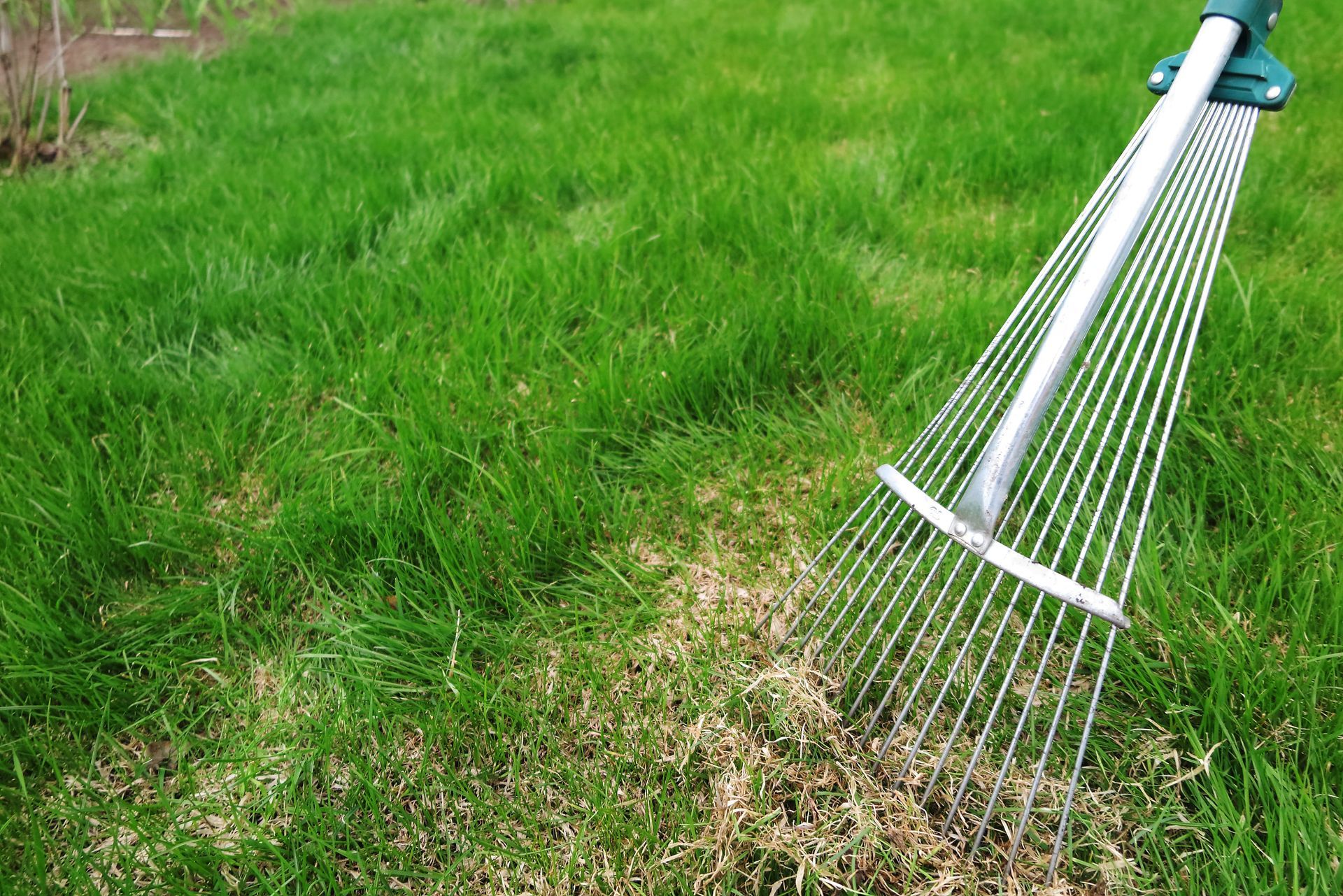
Thatch, the layer of dead organic material between the soil surface and the living grass blade, becomes a problem when it exceeds half an inch in depth. Thatch above that threshold prevents water and fertilizer from reaching the root zone effectively. Pressing a probe through the thatch layer during the walk-through gives a quick read on whether aeration and overseeding needs to be part of the first-season plan or whether fertilizer alone can drive meaningful improvement.
How Long Before You See Results From a Lawn Care Program in Almont, MI
What to Expect in Season One
The first visible change most homeowners notice is color improvement, typically within 10 to 14 days after the first fertilizer visit. Weed pressure reduction takes longer because pre-emergent controls work by preventing germination, not by eliminating existing weeds immediately. By midsummer of the first full program season, a property that had heavy crabgrass the prior year should show significant reduction in annual weed density, assuming the pre-emergent was applied before the germination window opened.
Building Density Over Two to Three Seasons
Turf density builds progressively over two to three complete seasons of proper care. A first-year program rebuilds the soil nutrient profile and establishes protective pre-emergent timing. A second season builds on that foundation with a healthier starting point. By the third year, properties that were weed-dominated or thin on arrival often look noticeably different from neighboring untreated lawns. North-facing shaded lots along Church Street typically take one additional season compared to full-sun properties because light limitation slows recovery.
What Disrupts the Program and How to Recover
Missing a fall application, particularly the pre-winter potassium visit, is the most damaging single interruption to a multi-year program. It leaves turf underprepared for Lapeer County's freeze cycle and significantly increases snow mold risk the following winter. If a season is partially missed, recovery begins with a thorough spring assessment to determine what damage occurred before resuming the normal program schedule rather than picking up mid-cycle without accounting for what was skipped.
Quick Answers About Lawn Care in Almont, MI
When Should Pre-Emergent Crabgrass Control Be Applied in Almont, MI?
Pre-emergent in Almont should be timed to soil temperature, not a calendar date. Sandy loam moraines in Lapeer County warm faster than heavier soils to the south, pushing the 55-degree crabgrass germination threshold into late April in warm years. Applications must be in place before that threshold is crossed to be effective.
How Many Treatment Visits Does a Lawn Need Per Year in Lapeer County?
Seven visits per season cover the complete program cycle from early spring pre-emergent through pre-winter potassium. Fewer than five visits leave critical application windows uncovered, most commonly the fall strengthening visits that determine how well turf survives winter and recovers the following spring in Lapeer County.
What Causes Brown Patches That Do Not Respond to Watering?
Brown patches that persist after watering are rarely drought stress. Grub feeding below the surface severs roots so turf cannot absorb water regardless of irrigation. Fungal disease creates lesions that worsen with overwatering. Compacted soil kills roots through oxygen deprivation. Each cause requires a different treatment, so identifying the active mechanism before applying anything matters.
Is Organic Lawn Fertilization Effective in Michigan Climates?
Organic-blend fertilizers work in Michigan's shorter growing season when applied early enough. The roughly 150-day window in Lapeer County requires first applications as early as the soil allows each spring. Results take longer than synthetic programs in year one, but turf density improves measurably by season two, making organic care effective for households with pets and children.
How Does a Lawn Care Program Protect Property Value in Almont?
A documented lawn program is a visible differentiator in the Almont market. Buyers inspect curb appeal before entering a property, and dense, weed-free turf creates an immediate positive first impression. Homes with transferable service agreements signal to buyers that the lawn's condition results from consistent professional care, which supports faster offers and stronger appraisals on comparable properties.
Frequently Asked Questions — Lawn Care in Almont, MI
What is included in Visionary Fertilization's 7-Step Treatment Program?
The program covers seven visits from early spring through pre-winter. Each visit targets the specific condition the lawn faces at that point in the season: pre-emergent crabgrass control, broadleaf weed treatment, slow-release summer fertilizer, optional grub control, summertime fertilizer and herbicide, late-season fall feeding, and pre-winter potassium. The sequence is designed so each application prepares the lawn for the next challenge ahead.
How early in spring does the first visit happen?
First visits for Almont properties are scheduled based on soil temperature data for Lapeer County, typically between late April and early May. The goal is to apply pre-emergent before the sandy loam soils warm past the 55-degree threshold. In warm years, that can mean a late-April start. Cold springs may push it into the first week of May, but waiting significantly past that window risks crabgrass germinating before the product is in place.
Do you service both village lots and township acreage in Almont?
Properties throughout the Almont village and Almont Township are serviced, from small historic lots near downtown to larger parcels along Van Dyke Road and Millville Road. Program pricing scales with square footage of treated turf area, and large-acreage properties can select which zones of the lawn to include in the annual program rather than committing to treating every square foot.
Can the service agreement be paused between seasons?
Pausing the agreement between seasons is possible, though the program is designed as a continuous multi-year treatment. Pausing resets some of the protective benefits built up over prior seasons, particularly the pre-emergent timing calibration and fall soil conditioning. Homeowners who pause for one season typically need to treat the resuming year as a partial re-establishment rather than a seamless continuation.
What happens if weeds return between scheduled visits?
Service follow-up for weed escapes between scheduled visits is part of the program management process. If a broadleaf flush or crabgrass breakthrough occurs between visits, a technician can assess whether a supplemental application is warranted. The goal is a consistent seasonal result, not simply delivering seven applications on a fixed schedule regardless of what is happening in the lawn.
Are the products safe for dogs and children after application?
Product safety depends on the formulation selected. Organic-blend programs use products with minimal re-entry restrictions. Synthetic programs have specific re-entry intervals printed on product labels, typically ranging from 24 to 48 hours after the product has dried completely. Applicators communicate re-entry timing at the time of each visit so families know exactly when normal yard use can resume.
Does Visionary Fertilization handle grub control, or is that a separate service?
Grub preventative treatment is an optional add-on within the existing program, not a separate contractor engagement. Midsummer grub preventative is offered at the Visit 4 window, which aligns with the egg hatch timing for Japanese beetle and masked chafer grubs in Lapeer County. Combining grub treatment within the existing program eliminates the coordination and extra cost of bringing in a separate pest control service for the same visit window.
How does the lawn care program interact with aeration and overseeding?
Aeration and overseeding, when recommended, is performed as a separate service in late summer or early fall, typically between the Visit 6 and Visit 7 windows. Core aeration removes soil plugs that allow seed-to-soil contact in newly seeded areas and improves fertilizer and water penetration in compacted soils. Properties scheduled for aeration and overseeding in a given year receive a modified herbicide schedule around that window, since some herbicide products can interfere with seed germination.
What is the service guarantee on the lawn program?
Visionary Fertilization stands behind program results. If a scheduled treatment does not produce the expected result under normal lawn conditions, a follow-up assessment and correction visit is part of the service relationship. The guarantee framework is built around program integrity: a lawn receiving all seven visits on schedule, on a property where mowing height and irrigation are within reasonable range, should show measurable improvement over the full season.
How do I start a program for a new Almont property?
Contact Visionary Fertilization for a free estimate. A technician walks the property, identifies current conditions, and provides a program recommendation based on what the lawn actually needs rather than a one-size-fits-all package. New properties starting mid-season can begin on a modified schedule that picks up with the appropriate visit for the current point in the season, with the full program resuming the following spring.
Residential Lawn Services We Provide in Almont, MI
Additional Services Available for Almont Properties
Lawn Care
Complete 7-Step fertilization and weed control for Almont, MI residential properties. Pre-emergent timing calibrated to Lapeer County soil temperature data, not a fixed Michigan calendar date. Sandy loam moraine soils in Almont warm two to three weeks faster than Macomb County clay, and the program accounts for that. MDARD-licensed applicators. Veteran-owned
Outdoor Pest Control
Mosquitoes, fleas, and ticks pressure Almont yards from late May through September, with tick activity extending into October on properties bordering the wooded corridors along Millville Road and the township's rural edges. Synthetic and organic barrier spray options available.
Aeration and Seeding
Almont's glacial moraine soils compact over time, closing off the root zone to fertilizer and water regardless of how often applications go down. Core aeration paired with overseeding is the reset that restores penetration on properties where the program has stopped producing visible seasonal improvement.
Tree and Shrub Program
Deep root feeding, insecticide, and fungicide treatments for ornamental trees and shrubs on Almont properties. Properties running lawn care and tree and shrub programs together qualify for a bundled program rate.
Schedule Your Free Lawn Care Estimate in Almont, MI Today
Almont is the only community in the Lapeer County service area where the glacial moraine sandy loam pushes crabgrass germination two to three weeks ahead of what a Macomb County-calibrated program schedule accounts for, and where the same street can have a 6,000 square foot cottage lot next to a two-acre township parcel requiring a completely different treatment approach. Visionary Fertilization comes to Almont, walks the actual turf conditions, and sets the program timing around what that specific lawn faces before a single product is applied. Call (586) 315-4731 or visit visionaryfert.com for your free Almont estimate. Veteran-owned.